
Introduction
With the plethora of technology available, it’s often difficult to know where to begin. So, before you think about investing in technology, start by understanding your organisation.
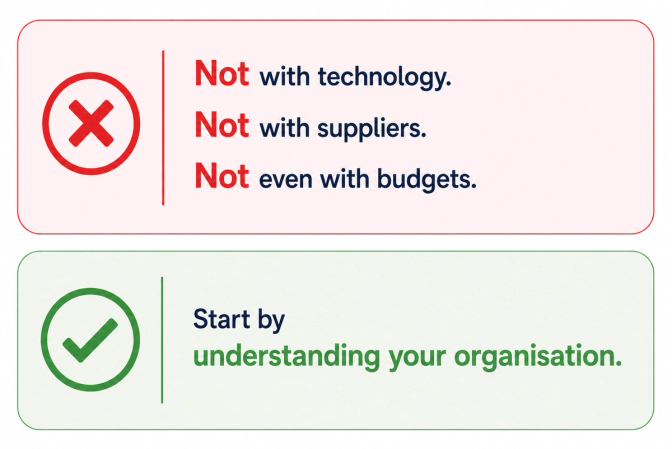
Technology should solve problems rather than create them. Fully understand what needs improving and then invest in systems. The result will almost certainly be transformed systems that overcome inefficient processes.
A Health Check, Not a Technology Audit
A digital transformation health check isn't about judging whether your organisation is ‘good’ or ‘bad’ with technology. It creates an objective picture of how your organisation currently operates and everybody has a different starting point.
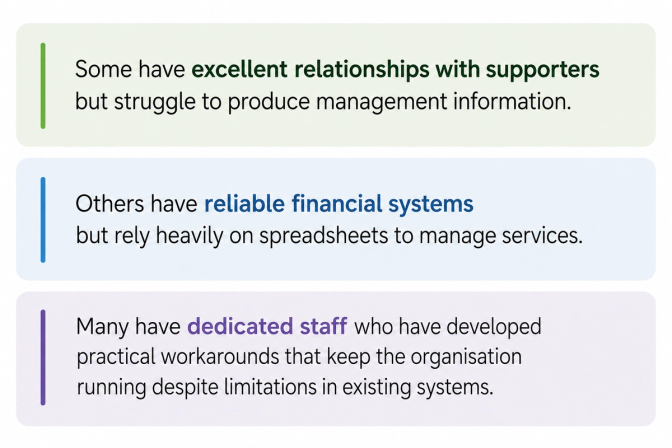
Understanding your strengths is just as important as identifying opportunities for improvement.
Digital transformation should build on what already works, rather than replacing successful ways of working simply because new technology is available.
A health check helps organisations understand their level of digital maturity. It is not a pass or fail exercise and it is influenced by your size, resources, funding and strategic priorities.
The objective is not to compare yourself with others. It is to understand where you are today so that you can make informed decisions about what comes next.
The Purpose of a Health Check
The purpose of a health check is not to produce a long list of problems. Its purpose is to identify the few improvements that will make the greatest difference.
For one organisation, that might be improving data quality. For another, it may be reducing duplicate data entry or making it easier to produce reports for trustees and funders. Others may discover that their greatest opportunity lies in helping staff make better use of systems they already have.
The most successful digital transformation programmes rarely begin with major investment. They begin with a shared understanding of where the organisation is today, agreement on priorities and a commitment to taking the next practical step.
Building an Accurate Picture
A meaningful health check looks beyond individual systems and asks broader organisational questions.
For example:
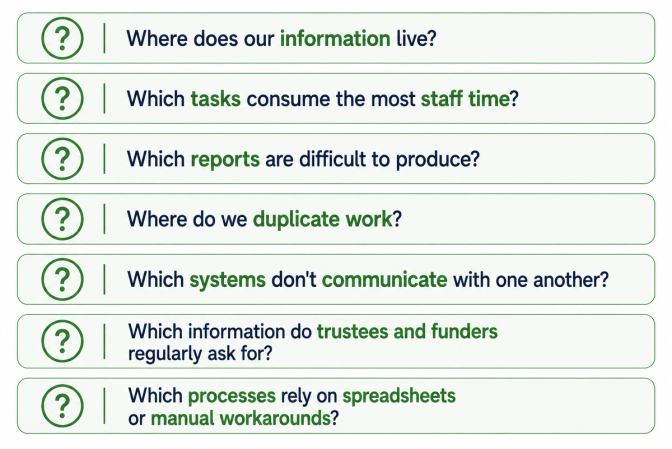
These conversations often reveal opportunities that have little to do with buying new software and everything to do with improving the way people work together.
Look Beyond Individual Roles
Efficiency and effectiveness come together when processes are optimised across all areas, interconnecting the range of requirements.
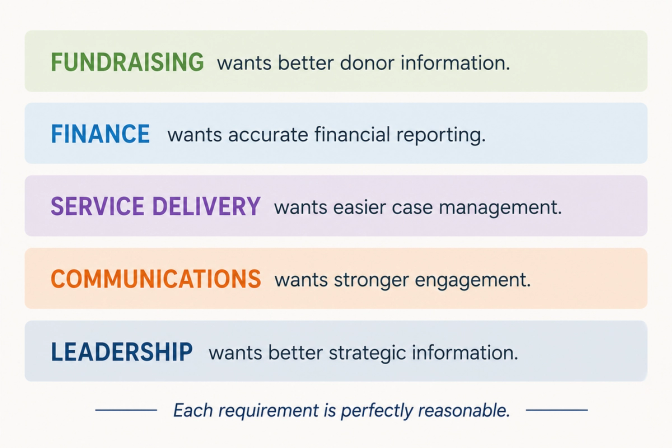
The difficulty arises when each department attempts to solve its own challenges in isolation.
Fundraising, finance, communications and service delivery are all working towards the same organisational mission. Yet each team naturally focuses on the information it needs to perform its own role.
Over time, this often leads to separate systems, disconnected spreadsheets and duplicated processes. Information becomes fragmented, reports become difficult to produce and staff spend increasing amounts of time searching for data rather than using it.
A digital health check encourages organisations to step back and look at the complete picture. Instead of asking how individual departments can become more efficient, it asks how information should flow across the whole organisation so that everyone benefits.
Digital transformation succeeds when organisations focus on the complete journey of information rather than individual pieces of software.
People, Processes and Technology
One of the biggest misconceptions about digital transformation is that it is primarily a technology project.
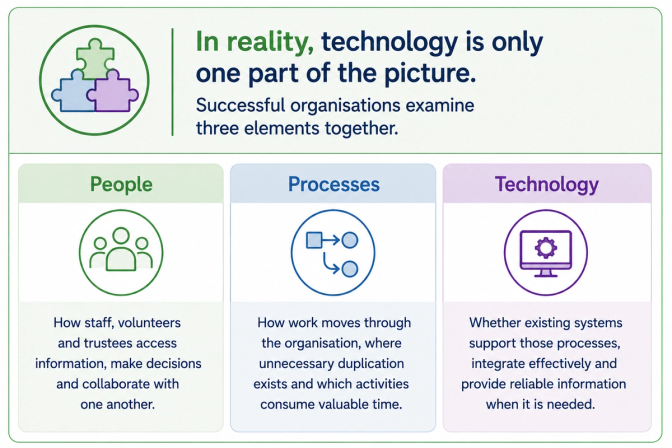
When these three elements work together, digital systems become enablers rather than obstacles.
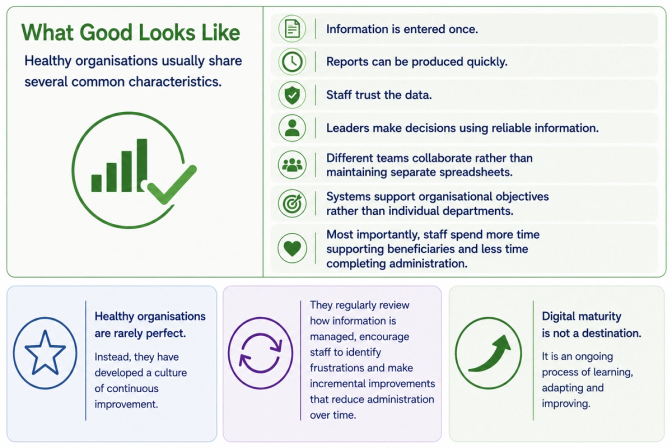
Start with Conversation
A successful health check does not require external consultants, complex software or technical expertise. It simply requires the right people asking the right questions.
Bring together representatives from leadership, fundraising, finance, operations, communications and service delivery.
Aim to answer at least these 5 questions:
1. What Information Do We Need Most Often?
Think about:
- funding applications
- trustee reports
- impact reporting
- service reviews
- donor communications
Then ask:
Where does that information currently live?
2. What Takes Too Long?
Ask staff:
"What task do you repeat every week that feels unnecessary or frustrating?"
The answers often reveal your biggest opportunities.
3. What Data Do We Not Trust?
Which numbers need checking?
Which reports are questioned?
Which spreadsheets contain duplicates?
Poor data affects confidence, reporting, funding and decision-making.
4. What Systems Are We Already Paying For?
Create a simple systems map.
List:
- each system
- its purpose
- who uses it
- whether it integrates with other systems
- whether it is still adding value
Many organisations are surprised by how many different applications they rely upon.
5. If We Could Improve Just One Thing This Year, What Would Make The Biggest Difference?
Resist the temptation to produce a long wish list.
Focus instead on identifying the one improvement that would save the most time, improve decision-making or strengthen services.
Small improvements often create momentum for much bigger changes later.
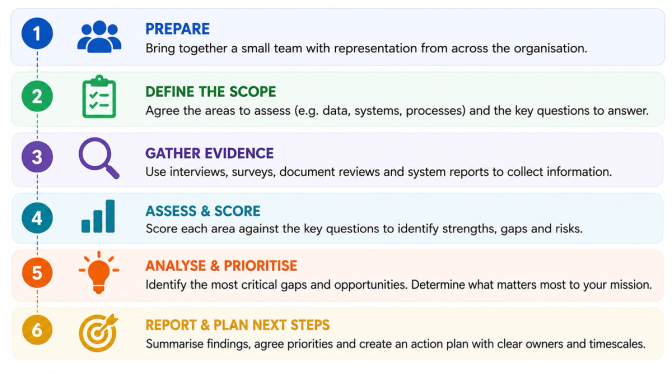
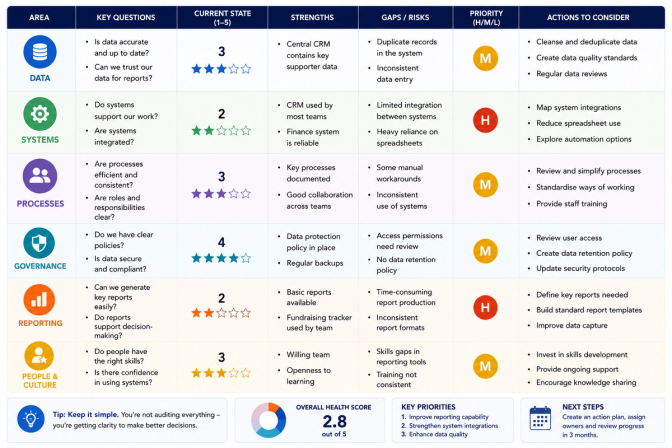
Practical Health Check Format (Example)
Looking Ahead
In the next article in this series, we'll explore how to turn the findings from your health check into a practical digital transformation roadmap, one that prioritises achievable improvements, aligns with organisational objectives and creates a realistic plan for long-term change.